Engineering reliable AI agents: The prompt structure guide



The difference between an AI assistant that "almost" works and one that consistently delivers high-value results is rarely a matter of raw model capability. Instead, the bottleneck is typically the quality and structure of the instructions provided. For DevOps and SRE teams building automated workflows, "magical prompt tricks" are no substitute for a repeatable, engineered structure.
This article provides a practical plan for building effective AI agents, detailing a six-part structure you can reuse across tasks to ensure reliability, safety, and clear outputs.
The problem: Instruction quality over model capability
If you have ever felt like an AI assistant is failing to meet expectations, the issue is often a lack of structural discipline. Vague tasks inevitably produce vague outputs. To bridge this gap, engineers must treat prompts not as clever messages, but as lightweight product specifications.
By defining roles, inputs, outputs, and constraints with the same rigor used in software engineering, you can create agents that are far easier to integrate, evaluate, and debug.
The six-component prompt blueprint
At the core of every reliable agent is a blueprint consisting of six essential components. Following this structure ensures that the model has the necessary context and boundaries to perform complex tasks.
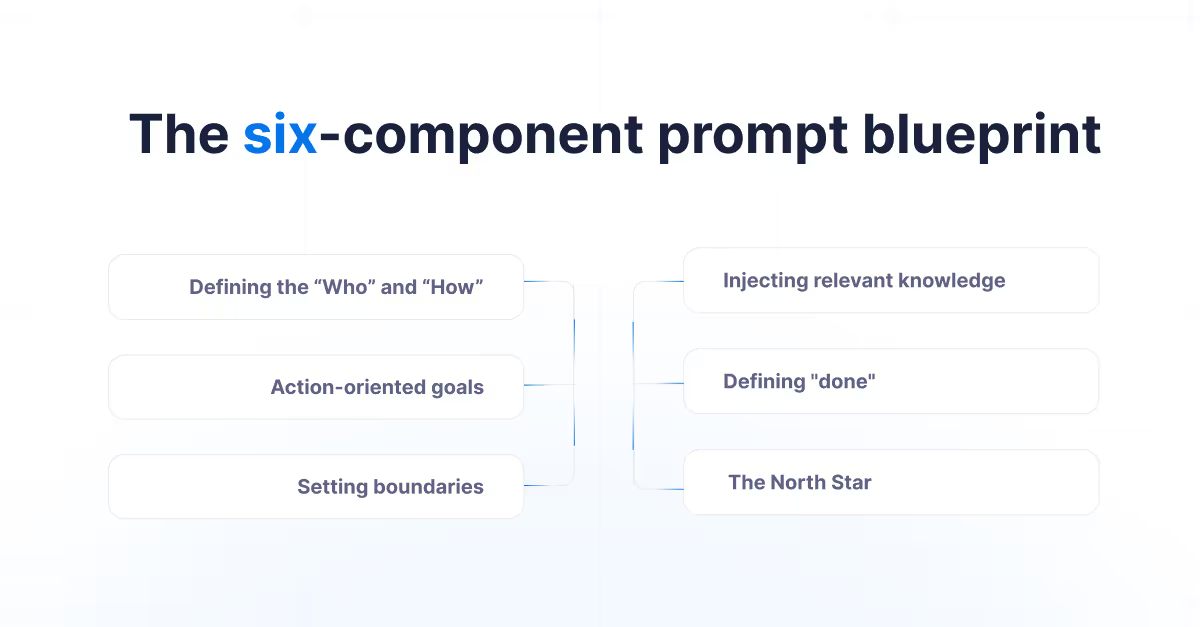
1. Rule and tone: Defining the "Who" and "How"
Start by establishing the persona and communication style. This sets the lens through which the agent's decisions, vocabulary, and depth of knowledge are shaped.
Example: "Act as a senior SRE with 10 years of experience in incident response and postmortem analysis."
2. Task definition: Action-oriented goals
Specify the goal using clear, action-oriented language. State precisely what the agent needs to achieve to produce a usable deliverable.
3. Rules and guardrails: Setting boundaries
Explicitly state constraints and quality checks to ensure consistency.
- Do: Use bullet points for lists.
- Don’t: Include PII (Personally Identifiable Information) in the output.
4. Data: Injecting relevant knowledge
Great prompts act as both instructions and inputs. Provide any necessary session context, metadata blocks, or specific technical documentation the agent should reference.
5. Output structure: Defining "done"
Tell the agent exactly what the response should look like (e.g., Markdown, JSON, or tables).
6. Key Reminder: The North Star
Restate the most critical requirements at the end of the prompt. Repetition improves adherence, especially when dealing with longer, more complex instructions.
Formatting for legibility and debugging
To make instructions easier for the model to follow and for you to debug, leverage Markdown formatting:
- Markdown Headers: Use # and ## to create a clear hierarchy for crawlers and the AI alike.
- Emphasis: Use bold text, blockquotes, or ALL CAPS for critical safety instructions.
- Cross-references: Create internal links between sections to help the model connect related instructions logically.
Structured prompts make it obvious which specific instruction caused a failure when something goes wrong, significantly reducing the time spent on prompt engineering.
Prompt template
Here is the template you can copy and paste.
# Role / ToneYou are a [role] with expertise in [domain].
Tone: [clear, concise, friendly, formal, etc.].
# Task DefinitionYour Goal: [one sentence describing the outcome]
Sucess looks like: [2–4 bullets describing what “good” means].
# Rules & Guardrails
Do: [required behaviors]
Don’t: [forbidden behaviors]
Quality checks: [accuracy, safety, policy, formatting, etc.]
# Data / ContexAudience: [who this is for]
Inputs: [paste text, metrics, constraints, examples]
Definitions: [key terms]
# Output Structure
Return your answer as:Format: [Markdown / Table / JSON]
Sections: [list exact headings]
# Key ReminderRepeat the two most important constraints here.Conclusions
Building effective AI agents requires moving away from conversational prompts and toward engineering-grade specifications. By using the six-component blueprint – Rule/Tone, Task, Rules/Guardrails, Data, Output Structure, and Key Reminder – you ensure that your AI assistants are predictable, reliable, and production-ready.
.avif)